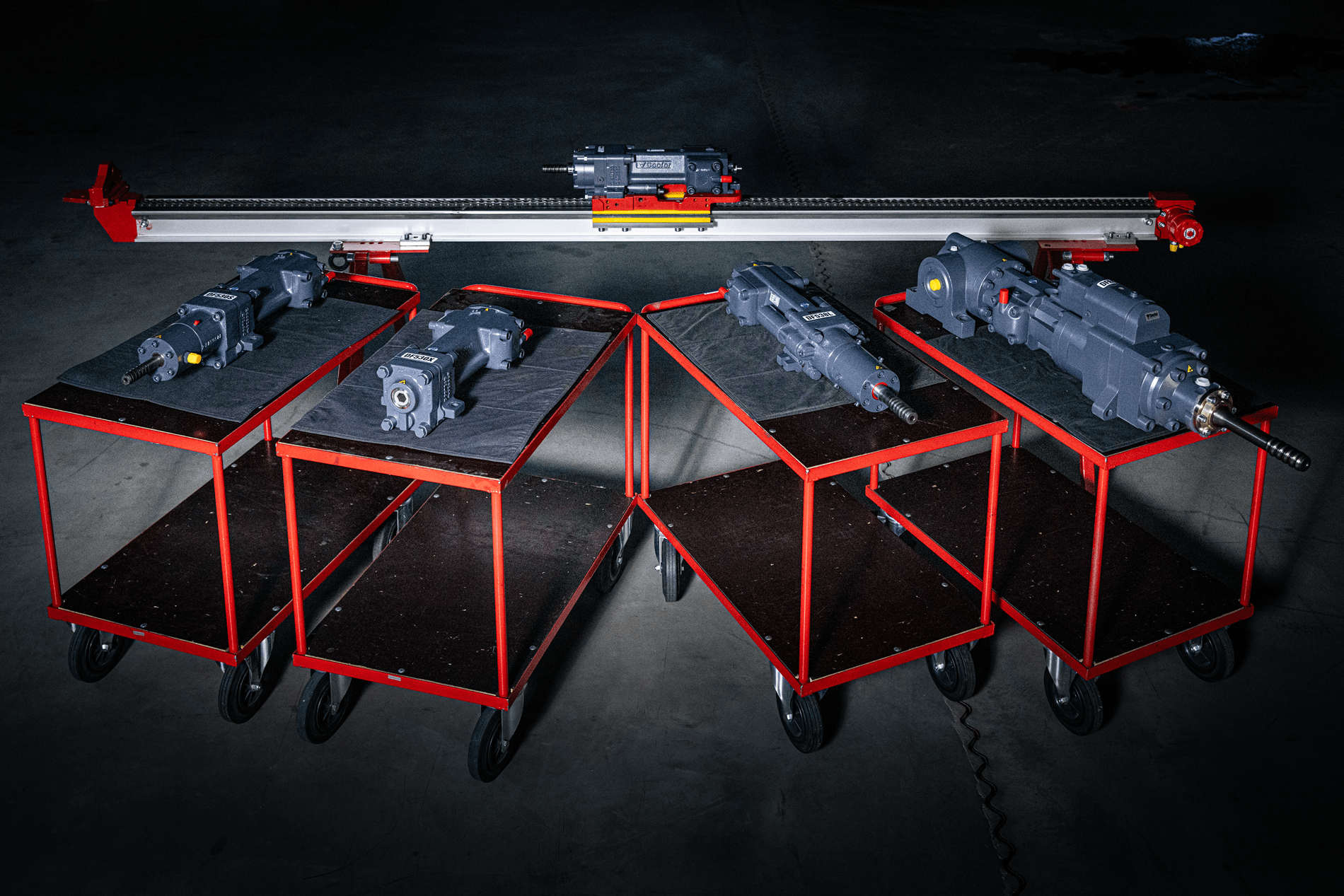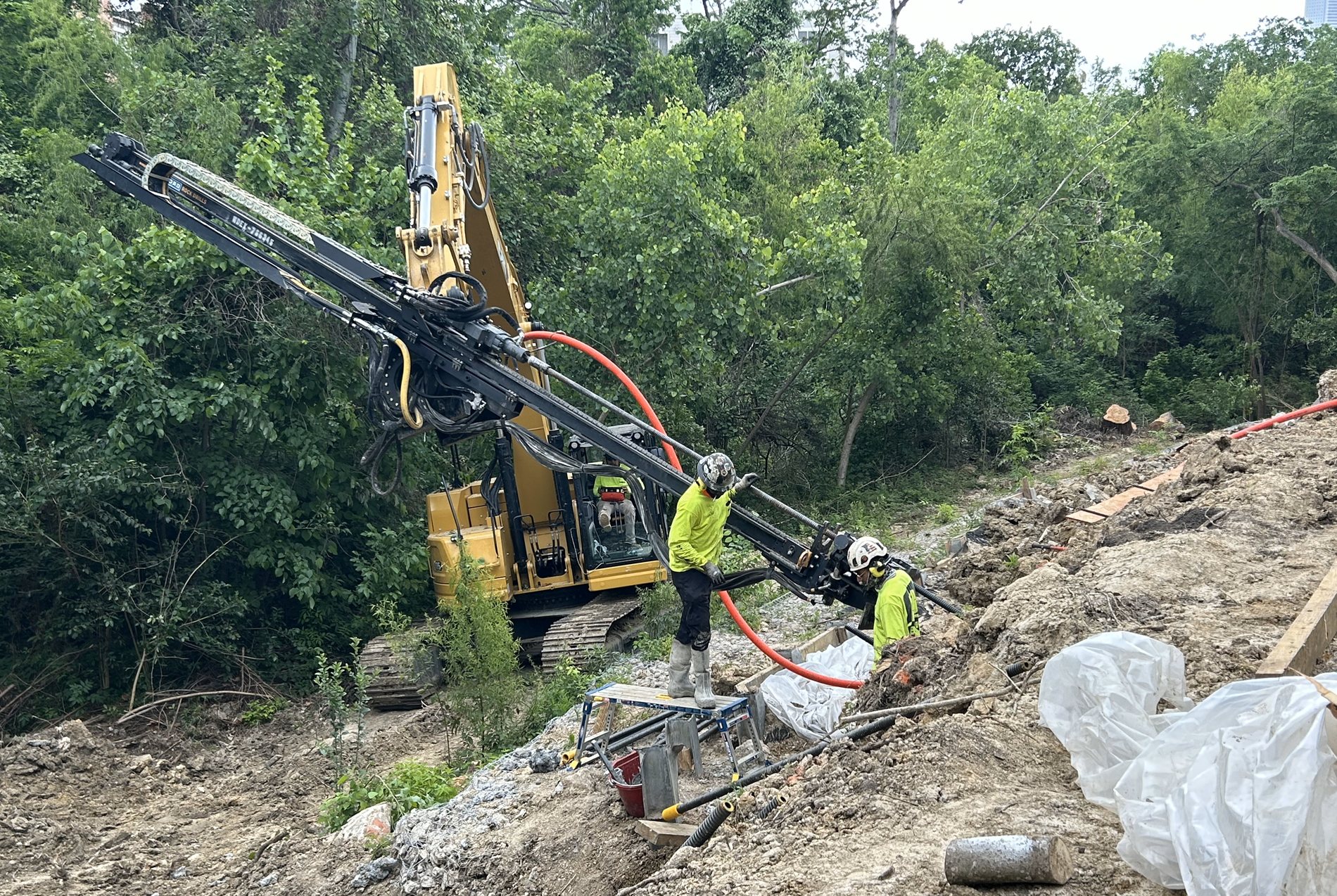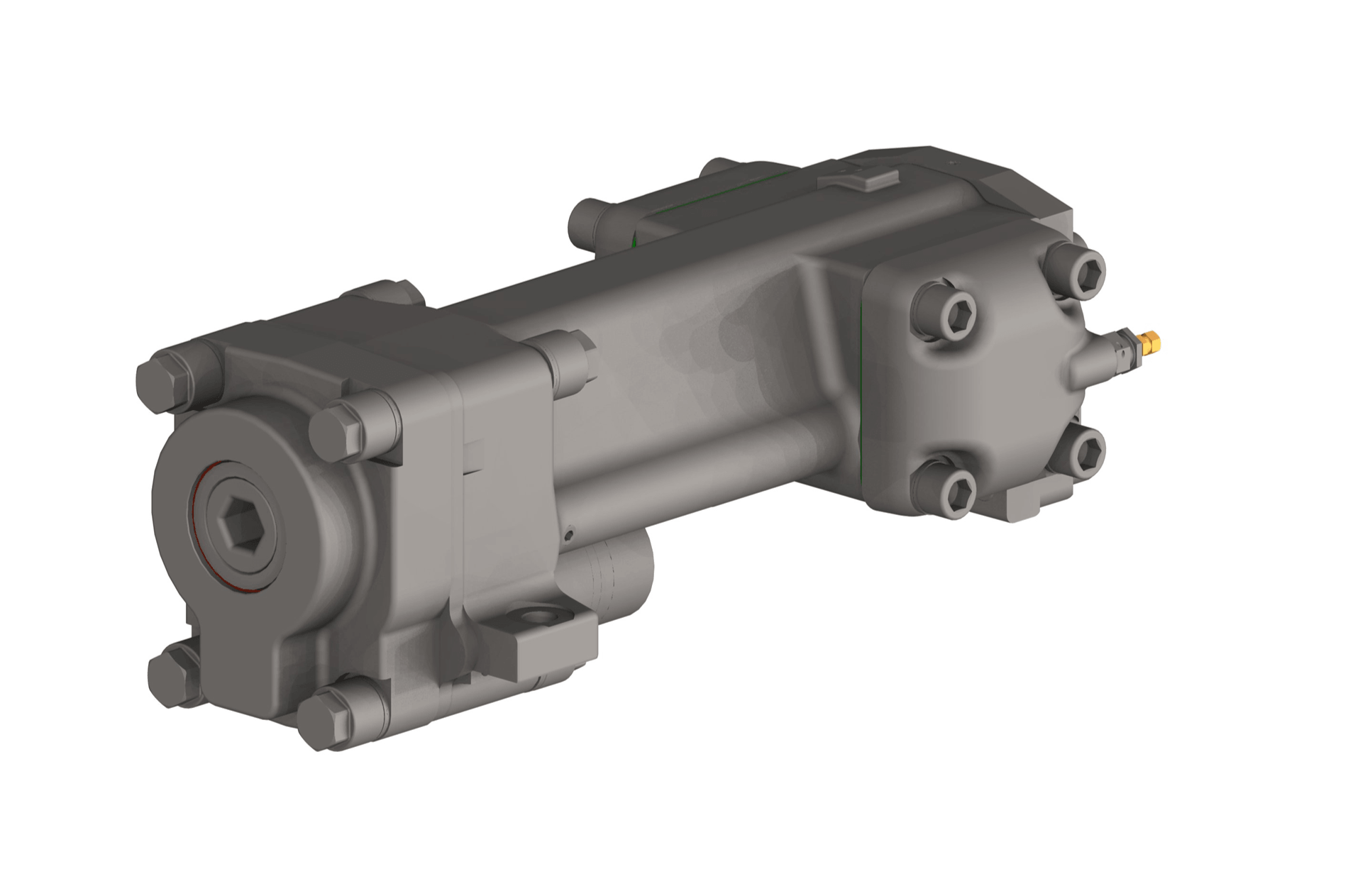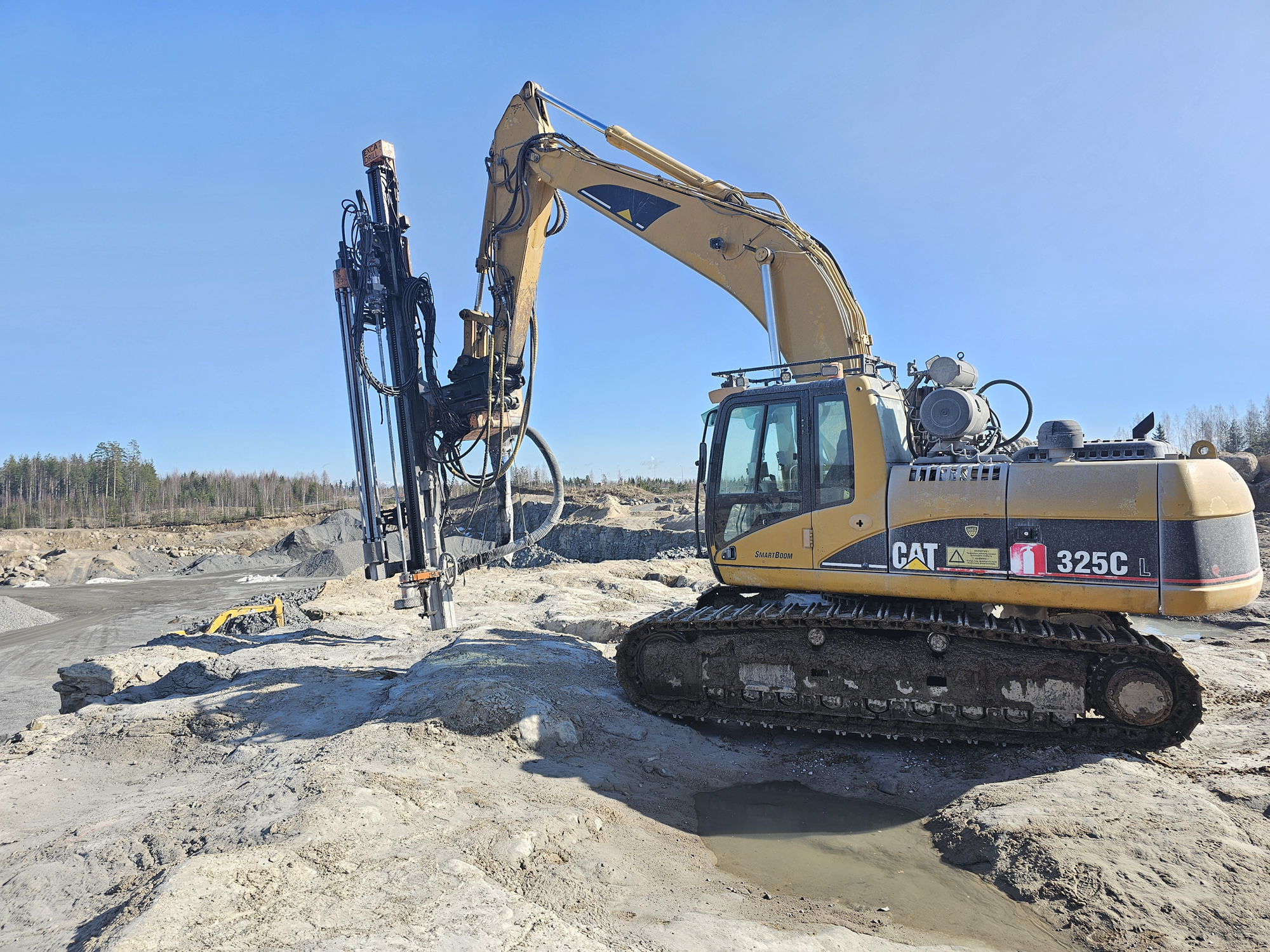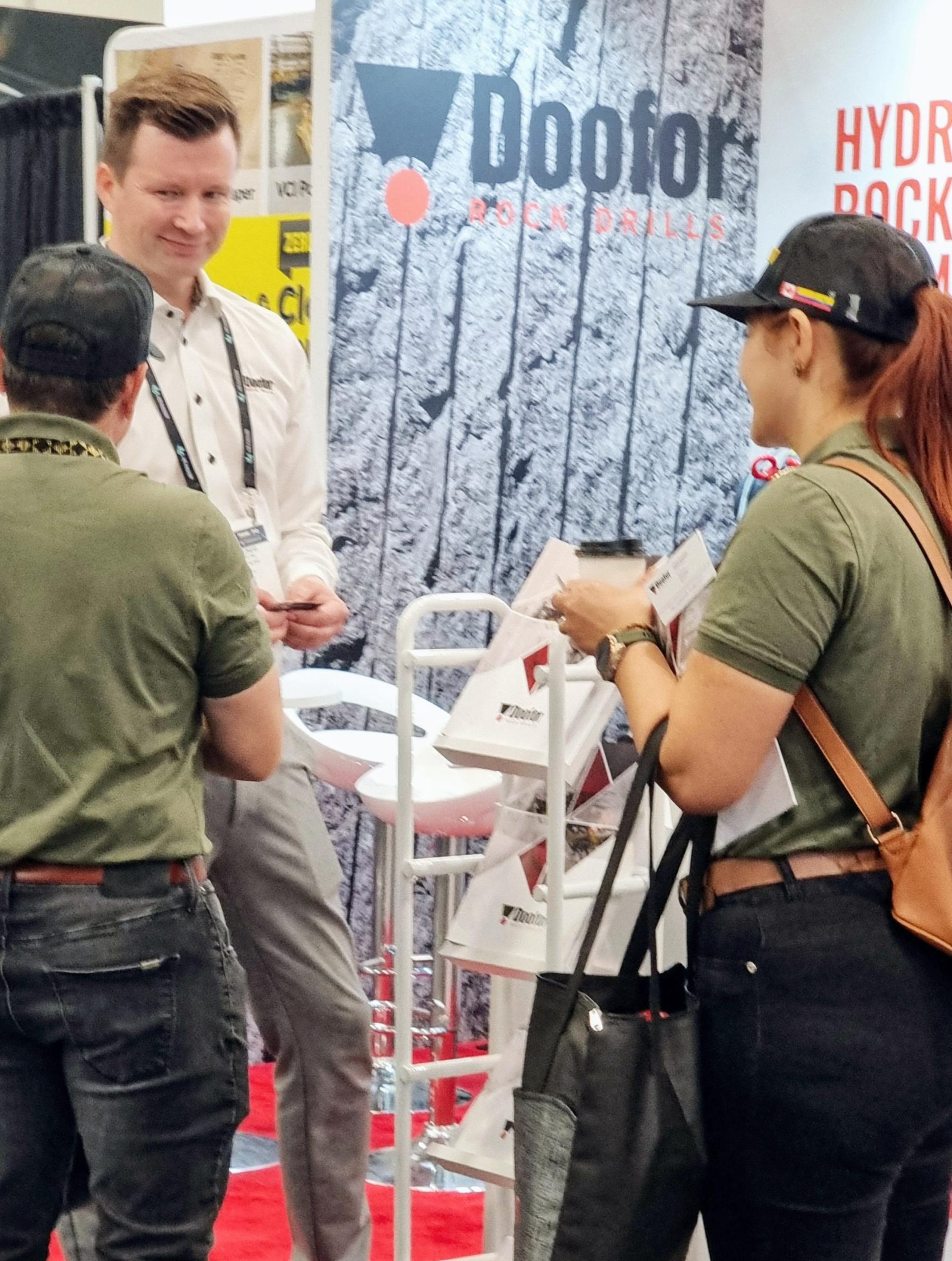
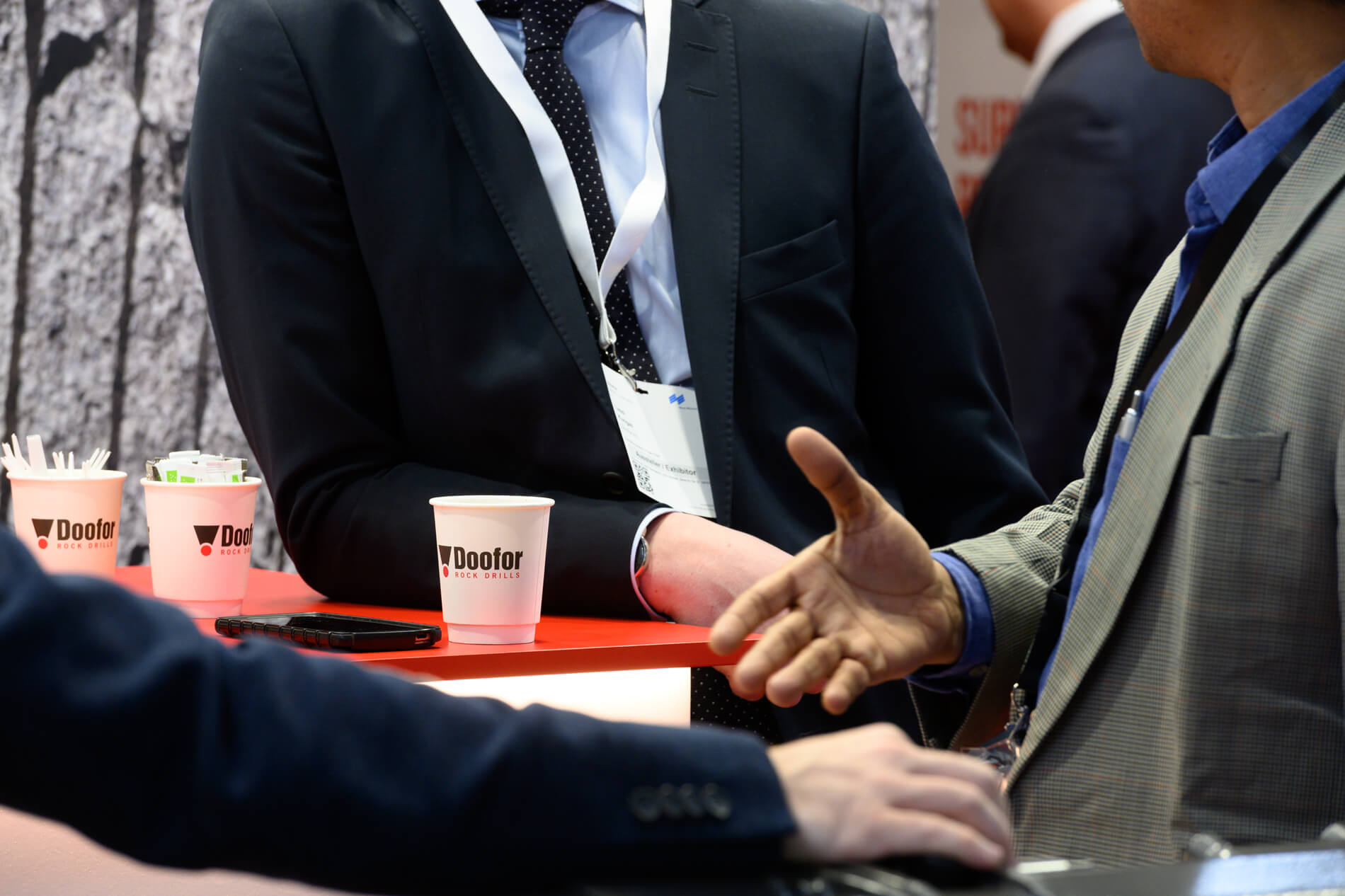
“For us, maintaining our brand at international trade fairs is a basic level of strategy. But the most important thing is that customers and potential customers can immediately talk with our experts,” says Kalle Kuusento, CEO of Doofor.
How B2B trade fairs create value
Trade fairs bring together equipment manufacturers, contractors, and other professionals working in the same field. This creates a setting where discussions are practical and focused.
“There is a kind of unhurried opportunity for discussion. Even though it’s work, the atmosphere is different. You can talk more freely without a strict agenda,” Kuusento explains.
Instead of formal meetings, conversations can start from real needs and develop naturally. “You can handle the machines, but more importantly, you can discuss. It’s not about explaining what a rock drill is, but about talking with people who already understand the work,” Kuusento says.
Technical discussions at the core
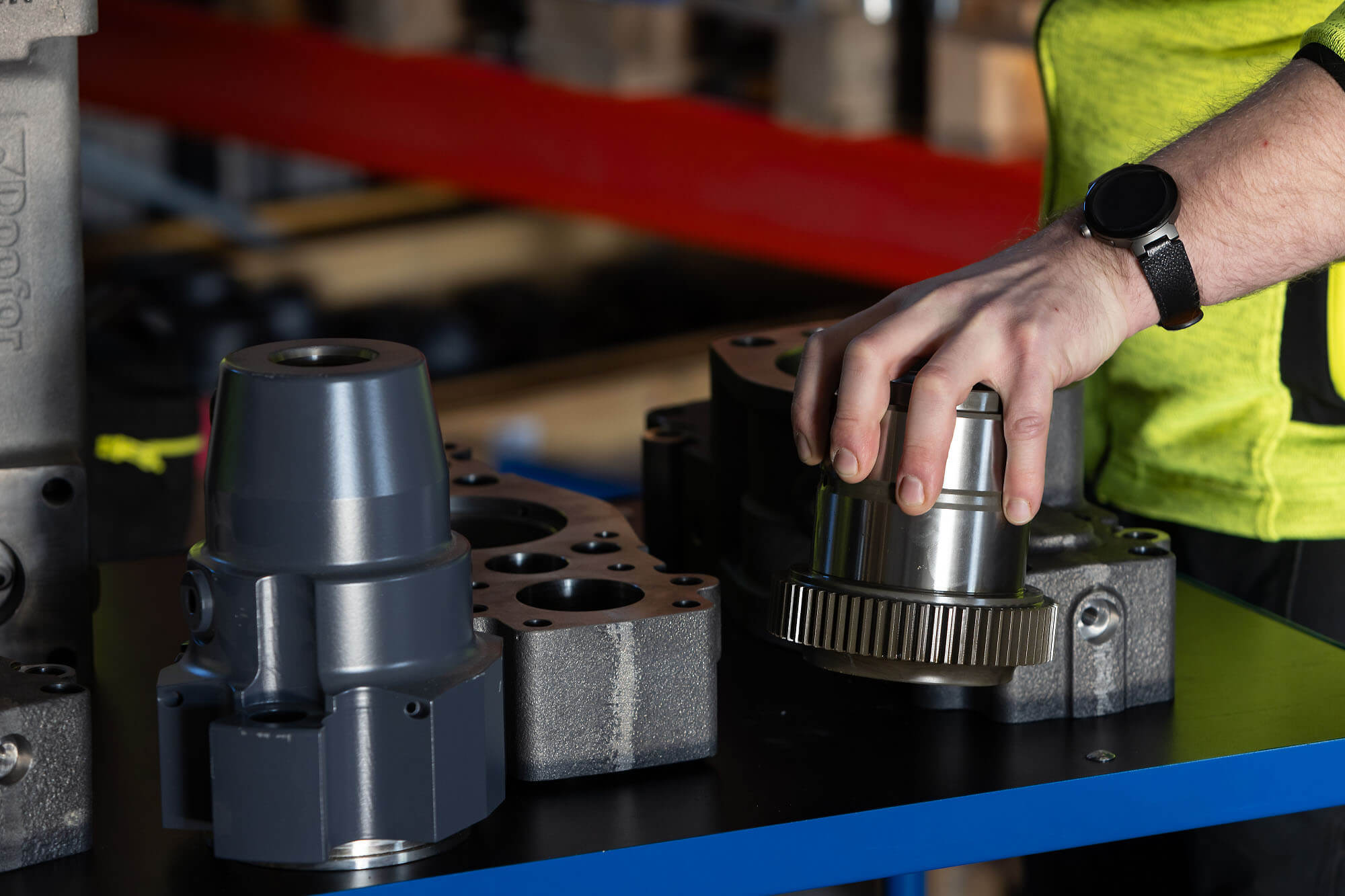
Doofor’s presence is built around expertise. Visitors meet professionals who can answer detailed technical questions and assess applications directly. “Our sales engineers are engineers. They are there so that visitors can ask difficult questions,” Kuusento emphasizes.
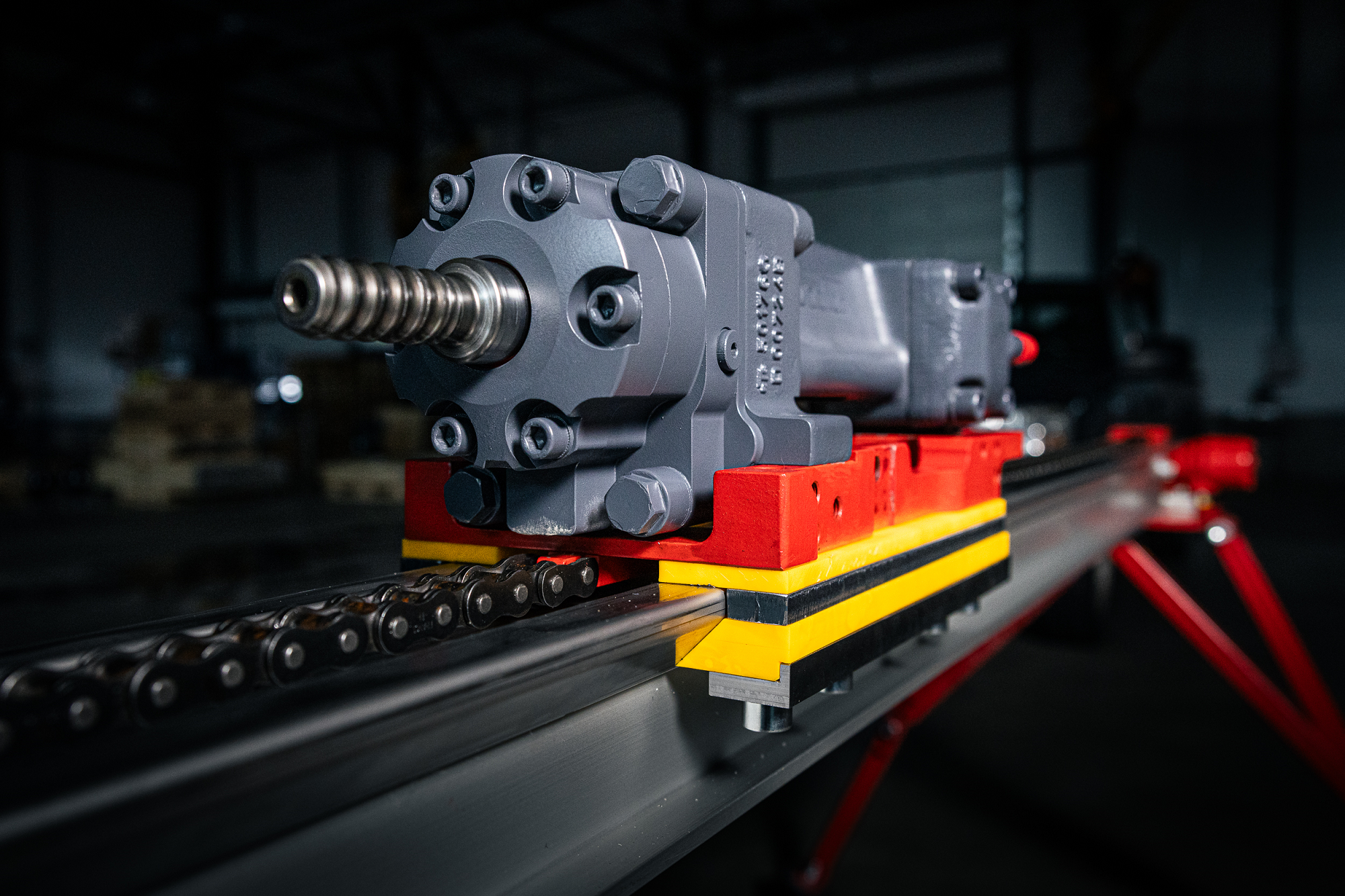
Discussions often begin with a specific need. “A customer might say they are developing a machine for a certain purpose. Then we look at whether our drill fits that application. If it doesn’t, we say so,” he says.
From there, conversations can go deeper into operating conditions, performance or special requirements.
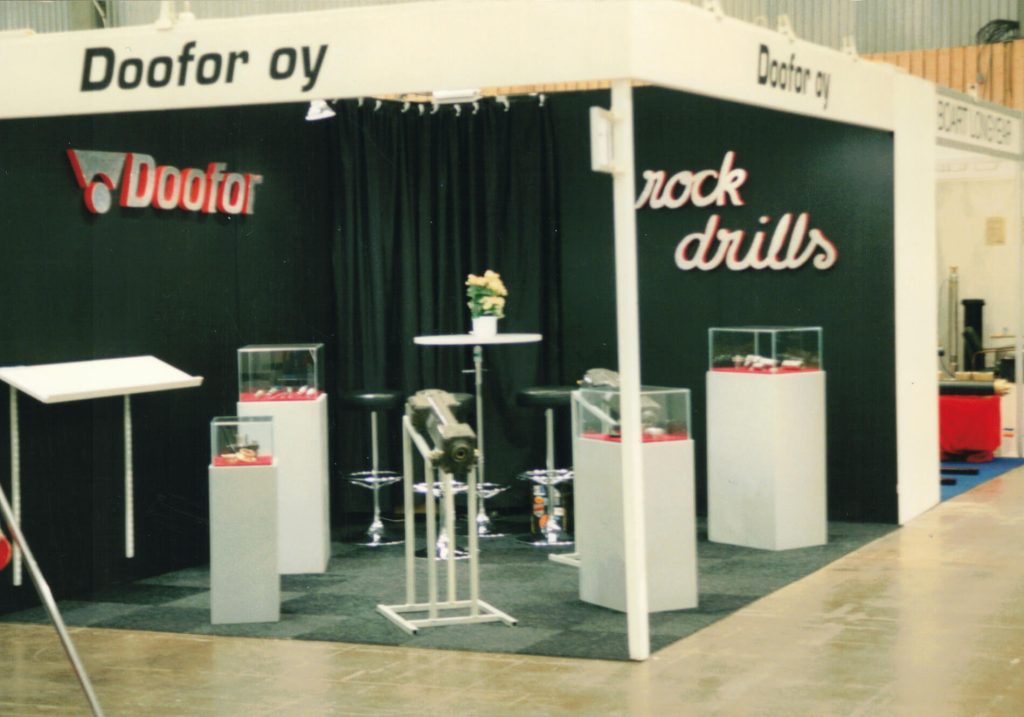
Choosing the right events and the long-term impact
Trade fairs rarely lead to immediate business. Their role is to start and maintain relationships over time. “We don’t expect someone to come to a trade fair and immediately place an order. These are openings for discussion. Sometimes it takes years before a real need appears,” Kuusento says.
When the need eventually arises, familiarity and trust already exist. “When the time comes, it’s important that the product is already familiar and the contact exists,” he adds.
For this reason, the impact is difficult to measure. “It’s very difficult to say within a year or two what the benefit is. That’s why some companies step back, even though the long-term impact can be significant,” Kuusento notes.
Not all trade fairs remain relevant, though, and companies need to be selective. “You also have to be able to leave some events. If the nature of the event changes or the right participants are no longer there, it may no longer make sense to attend,” Kuusento states. “A consistent presence in the right events builds recognition and credibility over time,” he adds.
The role of trade fairs today
While product information is widely available, face-to-face interaction remains essential. “The information is available without trade fairs, but the idea is not virtual. Physical presence is still at the core,” Kuusento says.
This has shifted the role of trade fairs toward discussion rather than presentation. “It’s less about one-way information and more about conversation,” he summarizes.
At their best, trade fairs bring together the right people and enable efficient interaction. “In a few days, you can meet many people you have only communicated with by email and move the relationship forward,” Kuusento says.
When everything works, the focus stays on what matters. “Then you can concentrate on business and discussions instead of practical arrangements,” Kuusento concludes.